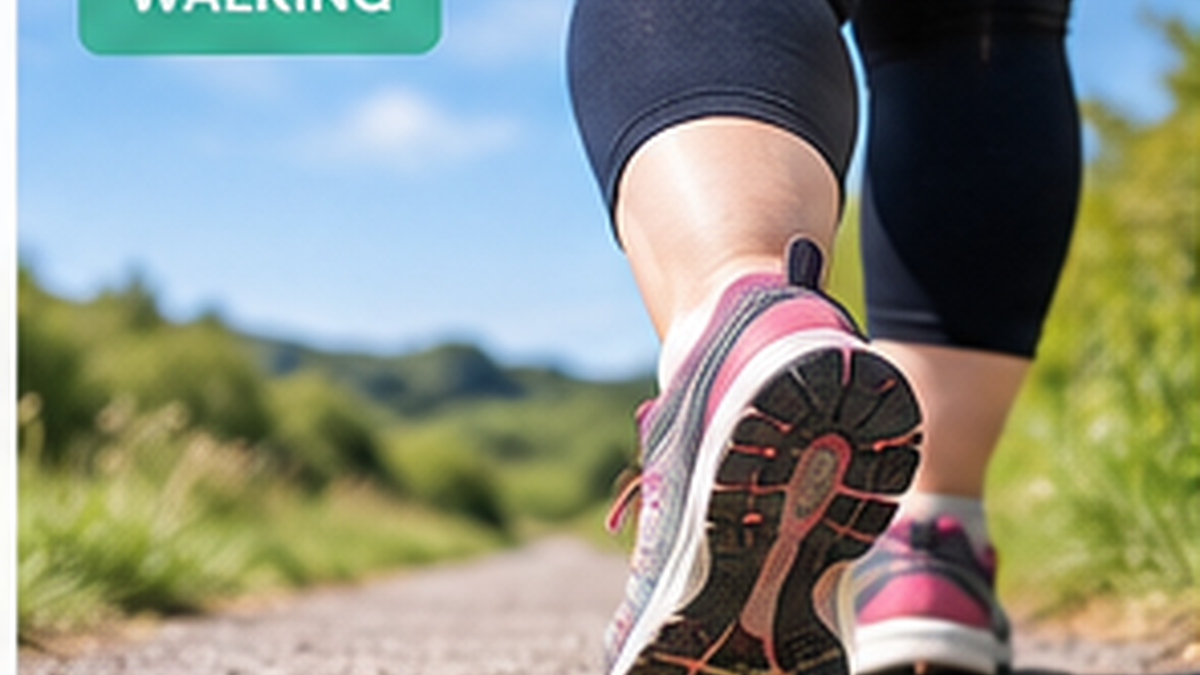
Walking is easy to underestimate because it does not look dramatic. There is no complicated equipment, no membership fee and no need to learn a new skill.
That is exactly why it works so well.
For many people in bigger bodies, walking offers a low-barrier way to improve fitness while keeping control over pace, distance and intensity.
Walking absolutely counts as exercise
A brisk walk raises your heart rate, warms you up and makes you breathe more quickly. The NHS uses the “talk but not sing” rule as a simple guide to moderate-intensity activity.
Even short walks can contribute towards the recommended weekly activity target. If ten minutes is what you can comfortably manage today, ten minutes is worthwhile.
Start with distance you know you can finish
One of the easiest mistakes is making the first walk too long.
Choose a route that feels almost too easy. Finishing with a little energy left is better than turning the walk into a miserable endurance test.
Try 10 minutes around your neighbourhood, one lap of a local park, walking to a shop instead of driving, or five minutes out and five minutes back.
Once that feels normal, add a few minutes.
Get your footwear right
Comfortable footwear matters, particularly as distances increase.
You do not necessarily need specialist walking boots for everyday pavements, but your shoes should feel supportive, fit well and avoid rubbing.
Browse walking shoes if you need a more comfortable pair.
Deal with chafing before it becomes a problem
Thigh, underarm and clothing friction can make an otherwise enjoyable walk miserable.
Longer shorts or leggings, seamless clothing, anti-chafing balms, moisture-wicking fabrics and changing damp clothing after longer walks can all help.
You can explore anti-chafing products if rubbing is an issue for you.
Build gradually
A simple progression might look like this:
Weeks 1–2: 10–15 minutes, three times a week Weeks 3–4: 20 minutes, three or four times a week Weeks 5–6: one slightly longer walk at the weekend plus shorter walks during the week
You do not need to increase both speed and distance at the same time.
Make bad weather less of an excuse
UK weather will eventually test every walking habit.
A light waterproof layer can make the difference between continuing your routine and abandoning it for several months. If you plan to walk regularly, waterproof walking jackets are worth a look.
On genuinely miserable days, walking indoors at a shopping centre, gym or on a treadmill still counts.
Track something other than weight
Walking improvements are often obvious before body weight changes. Look for lower perceived effort, faster recovery after hills, longer distances, improved mood, more stable energy and being able to walk and talk more easily.
These are real signs of improving fitness.
Hills are optional
You do not need to seek out steep hills immediately. Flat walking is still useful. If you later want more intensity, adding a gentle incline is one of the simplest ways to increase the challenge without having to run.
Walking can be social — or deliberately solitary
Some people stay consistent when they walk with friends. Others enjoy having quiet time, listening to a podcast or taking the dog.
Choose whichever makes you more likely to go.
Do not underestimate the psychological benefit
A regular walk can create a useful boundary between work and home, provide time outdoors and give you a small daily win.
You do not need to call it a workout. You just need to keep walking.
— Editorial note: General health and fitness information only; not individual medical advice.


