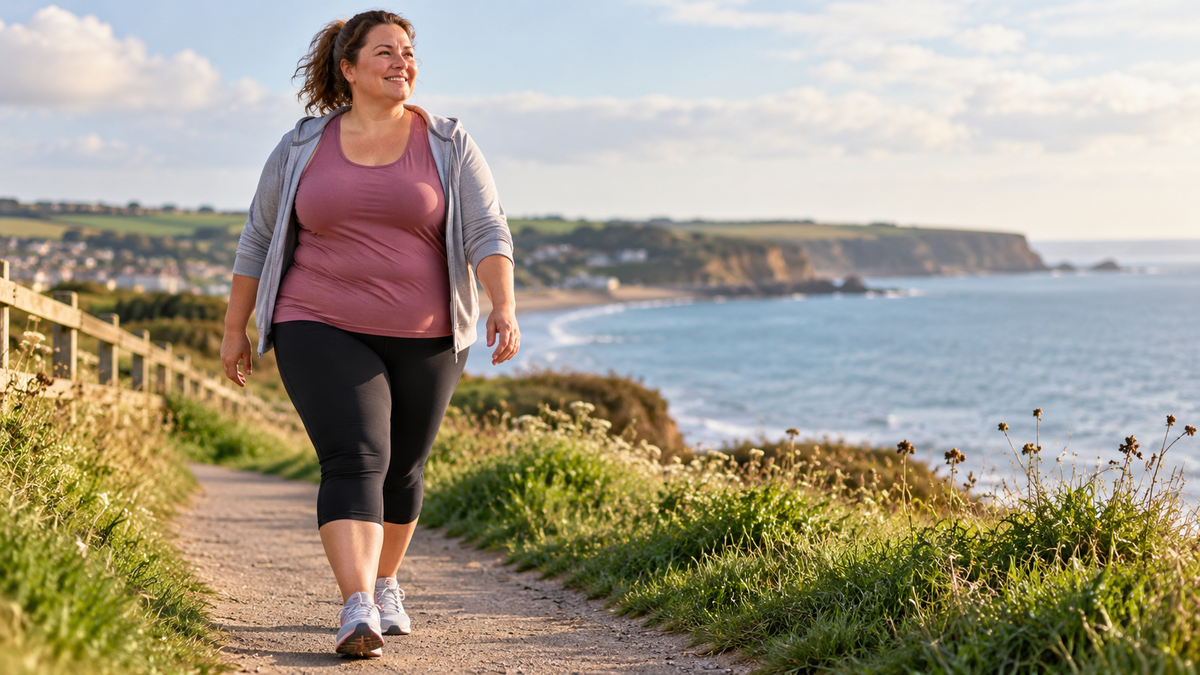
Starting exercise can feel surprisingly complicated when you’re plus size. The fitness world often presents movement as something you need to be “ready” for, or shows only one kind of body doing it. In reality, you do not need to wait until you are smaller, fitter or more confident. You can start from where you are.
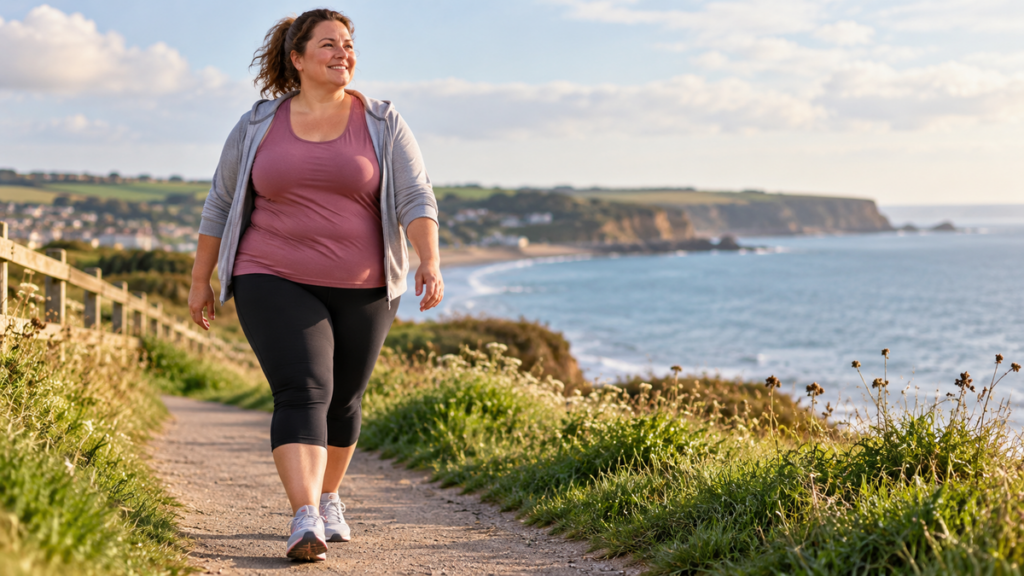
The best place to begin is not with a punishing programme. It is with movement that feels manageable enough to repeat.
Start with what your body can do today
If you have been inactive for a while, aim for short, comfortable sessions. Ten minutes of walking, a few sit-to-stands from a chair, or a gentle home workout all count.
The NHS recommends that adults eventually work towards 150 minutes of moderate-intensity activity a week, alongside strength work on at least two days. That is a destination, not a starting line. Building up gradually is entirely reasonable.
A useful first target is simply to move on more days than you currently do.
Choose movement you do not dread
You are far more likely to keep exercising if the activity itself is tolerable — and ideally enjoyable.
Good starting options include walking, swimming or aqua fitness, cycling on a comfortable bike, seated exercise, resistance-band workouts, beginner strength training, dancing at home and gentle gym cardio.
There is no prize for choosing the activity that burns the most calories. Consistency matters more than punishment.
Comfort matters more in a bigger body
Small discomforts can quickly become reasons to stop exercising. Pay attention to supportive footwear, clothing that does not ride up, a bra that feels secure if you wear one, and ways to reduce rubbing or chafing.
You may find it useful to browse supportive trainers, plus-size activewear or resistance bands before you begin.
None of this needs to be expensive. The goal is simply to remove unnecessary barriers.
Use the talk test
Moderate exercise should make you breathe faster and feel warmer, but you should still be able to talk. If you could comfortably sing, you may be going quite gently. If you can barely get a few words out, the intensity may be higher than you need as a beginner.
Your first sessions should leave you feeling as though you could probably have done a little more.
Add strength work early
Strength training is especially useful because it can improve mobility, balance and confidence in everyday tasks.
You do not need a gym. Try sit-to-stands from a sturdy chair, wall press-ups, supported squats, calf raises, resistance-band rows or light dumbbell lifts.
Start with a small number of repetitions and stop before your technique falls apart.
Do not use soreness as a scorecard
A little muscle soreness after doing something new is common. Being unable to move comfortably for several days is not evidence that a workout was better.
Progress can mean walking for five minutes longer, climbing stairs with less effort, sleeping better, feeling more confident in a gym, or simply keeping your routine going for another week.
Make your plan deliberately easy
For your first month, try something like:
Week 1: three 10-minute walks Week 2: three 15-minute walks plus one short strength session Week 3: three 20-minute walks plus two short strength sessions Week 4: keep the same structure and only increase if you feel ready
You can go slower than this. The important thing is creating a routine you can actually live with.
When to get medical advice
If you have a medical condition, significant joint problems, chest pain, unexplained breathlessness or you have not exercised for a long time and are concerned about starting, speak to your GP or another suitable healthcare professional.
Exercise should challenge you, but it should not feel unsafe.
The real goal
You do not have to become a different person to “count” as someone who exercises.
The most useful first milestone is not a number on the scales. It is reaching the point where movement becomes part of normal life rather than something you repeatedly start and stop.
Begin small. Make it comfortable. Repeat it.
— Editorial note: General health and fitness information only; not individual medical advice.


